Zen Artistry in the Modern World
Photo: Wix.com


Zen Artistry
Photo: Pixabay - Firmbee

Photos: Wix.com

Artificial Intelligence and High-Touch Applications
High-tech and high-touch are two complementary approaches that shape how people interact with technology in the modern world.
High-tech refers to the use of advanced tools such as automation, data analytics, and digital platforms to increase speed, efficiency
and accuracy. Artificial intelligence (AI) represents a powerful extension of high-tech because it allows machines to learn, analyze patterns, and make decisions. AI systems are used in everyday life, such as GPS navigation apps that suggest the fastest routes
for cars and trucks on the road, Computer Aided Design in architectural planning and medical diagnostics for analyzing a potential medical problem for a patient at risk while offering up recommended strategies going forward.
A GPS (Global Positioning System) is designed to provide electronic mapping and navigation capability in real time to users equipped with a smartphone and/or built-in GPS system into their car. Google Maps and WAZE are the two most widely used GPS navigational apps. used worldwide. WAZE is designed primarily for travel by car. When activated, it plots out the most direct and efficient driving route between the user’s starting location and destination point. WAZE excels at finding alternate routes around accidents and traffic jams and alerts drivers in advance of road-related incidents. The WAZE GPS service is based on real-time location data combined with user-generated information updates. Waze users share information about slowdowns, speed traps, police sightings and road closures, allowing Waze to update suggested routes in real time. The role of AI “high touch” comes into play by its ability to interpret, enhance, and make recommendations on that location data.
While high-tech creates efficiencies and provides convenience, high-touch ensures that the human perspective is well-considered.
The success of any AI enhanced technology or service depends how deeply it shapes the human experience, creates technical efficiencies and/or enhances critical judgement about a problem. High-tech and high-touch approaches work best together in fields
that require both advanced problem-solving and human judgment, such as architecture and medicine. High-tech tools, especially AI, allow professionals to manage complex data, test ideas quickly, and improve accuracy. High-touch elements ensure that creativity, ethics, empathy, and human experience remain central. When combined, these approaches lead to better-designed buildings and
more effective medical care. In architectural design, for example, AI represents a powerful high-tech tool for creating complex structures. Architects use AI-driven software to generate multiple design options, analyze structural stability, simulate environmental conditions, and optimize energy efficiency. AI can calculate how a skyscraper will respond to wind, earthquakes, or temperature changes in seconds. However, high-touch expertise is still essential. Architects must make creative decisions, consider cultural and community needs, and ensure that a proposed building space feels comfortable and meaningful for the people who use them.
In architecture, AI enhances precision while architects ensure creativity and human-centered design.
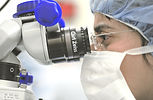
In the field of medicine, AI plays a high-tech role by analyzing and solving complex medical issues. Medical diagnostics relies on
so-called expert systems for purposes of research and analysis. An expert system is a computer program that uses artificial intelligence (AI) technologies to simulate the judgment and behavior of a human or an organization that has expertise and experience
in a particular field. Expert systems are a combination of technology and computer programs designed to solve complex problems
in a highly specialized field at an extraordinary level of human intelligence and expertise. There are two essential parts to an expert system; specifically, the knowledge base which stores information related to the problem being solved and the inference engine which uses that information to provide analysis work. The knowledge base is created by capturing the expertise and experience of multiple human experts, and the inference engine which uses various reasoning techniques to analyze the data and arrive at a corresponding set of solutions and recommendations. Expert systems are intended to complement, not replace, human experts. In medicine,
AI plays a "high-tech" role in analyzing and solving complex medical issues. AI systems can scan medical images, identify patterns
in patient data, and assist in diagnosing diseases more quickly than traditional methods. For instance, AI can help detect early signs
of cancer or predict health risks based on large datasets. Despite these advances, high-touch care remains critical. Doctors and nurses must explain diagnoses, consider a patient’s emotions and personal circumstances, and make ethical decisions that AI cannot handle on its own. In medicine, AI improves accuracy and efficiency while healthcare professionals provide compassion and trust.
By combining artificial intelligence with human insight and empathy, both the fields of architecture and medicine can address complex challenges while still prioritizing the people they serve. High-tech, high-touch is Zen artistry in its most essential form by balancing
high-tech AI tools with high-touch human engagement.